Guia de compra
How to choose a diving mask: fit, volume, and field of vision
The mask is one of the diver's most personal pieces of equipment. Two people can try the same model and have completely different experiences, because face shape, distance between the eyes, and skirt support area vary. Therefore, the best choice starts with fit, not color or brand.
1. Start with the seal
Place the mask on your face without putting on the strap. Move your hair away from the contact area and gently inhale through your nose. The mask should stay in place for a few seconds without needing to be tightened. This test does not reproduce all conditions underwater, but it helps to exclude models that show obvious gaps.
Observe mainly:
- the area between the nose and the upper lip;
- the temples;
- the passage of the skirt along the hair;
- any pressure points on the forehead or the bridge of the nose.
A very tight strap does not correct an inadequate seal. On the contrary, it can deform the silicone skirt, create discomfort, and even facilitate small water leaks.
2. Internal volume: low or traditional?
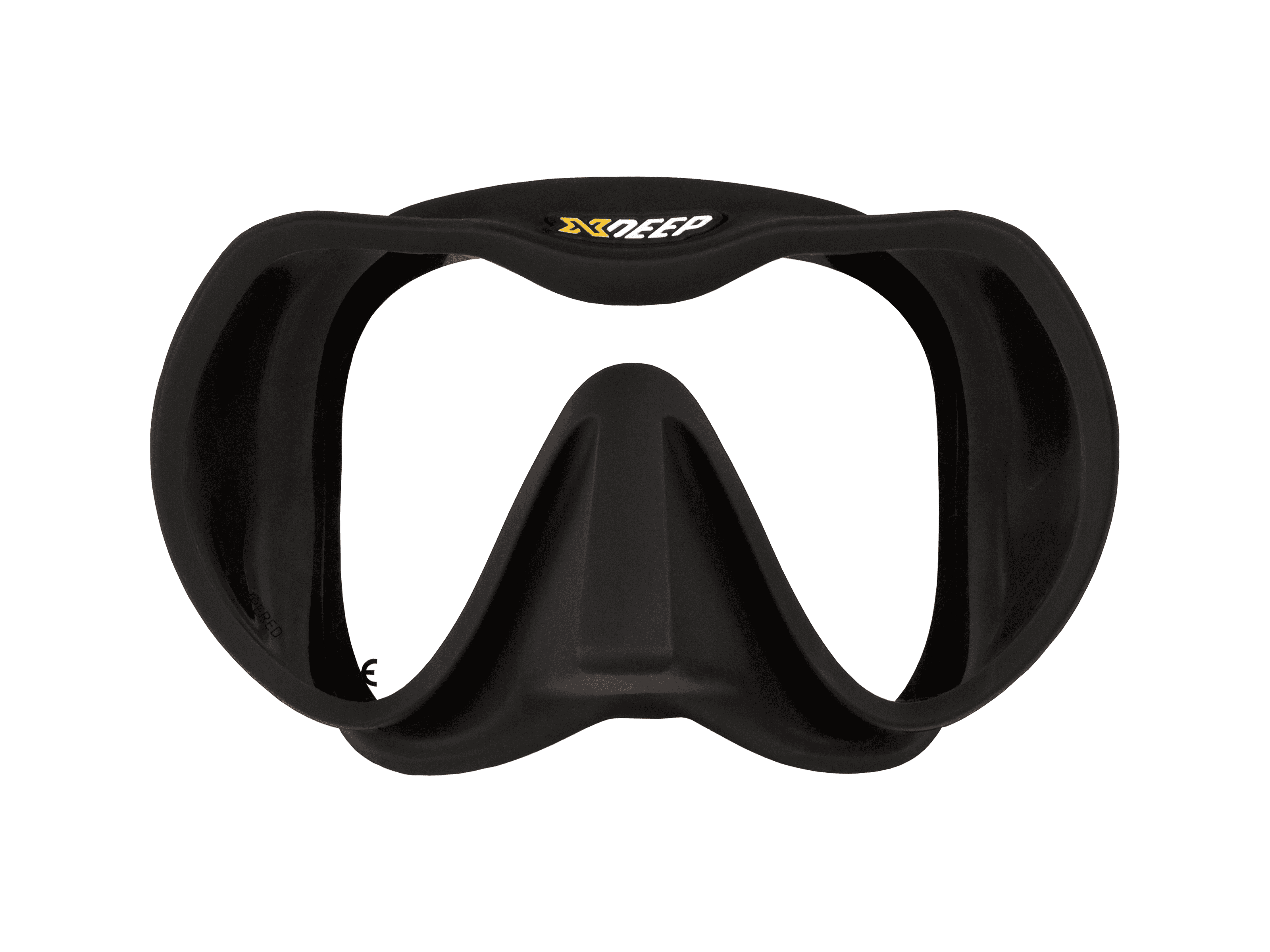
Internal volume is the air space between the face and the lenses. A low-volume mask sits closer to the eyes, requires less air to equalize, and is usually easier to clear. It is a common choice for freediving, spearfishing, and divers who value a compact mask.
A traditional volume model can offer a more spacious feel and a different lens geometry. There is no universal winner: compare comfort, ease of access to the nose, and use with a hood or gloves.
3. Field of vision and lens type
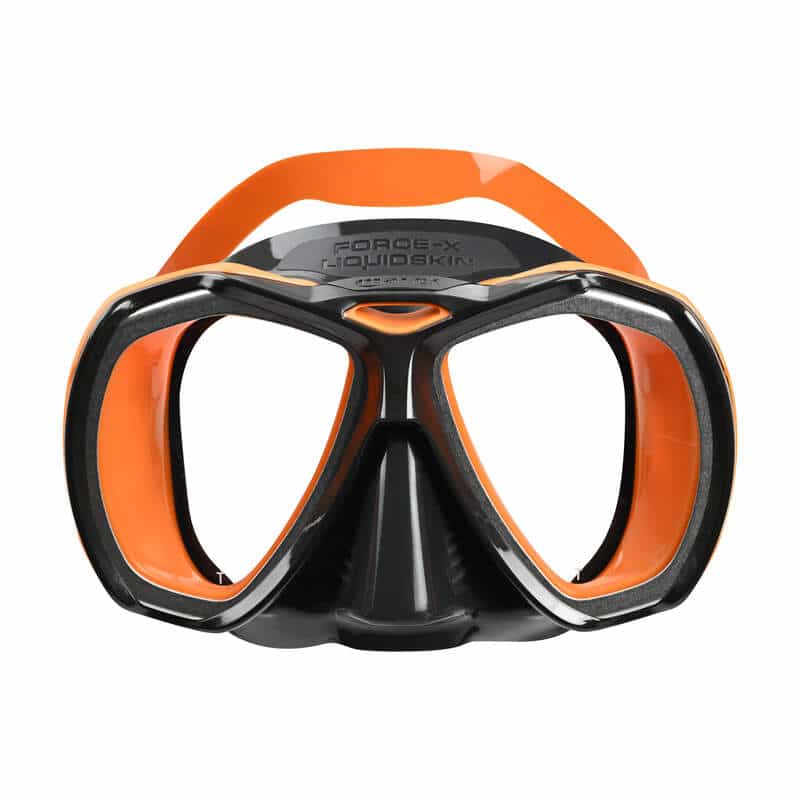
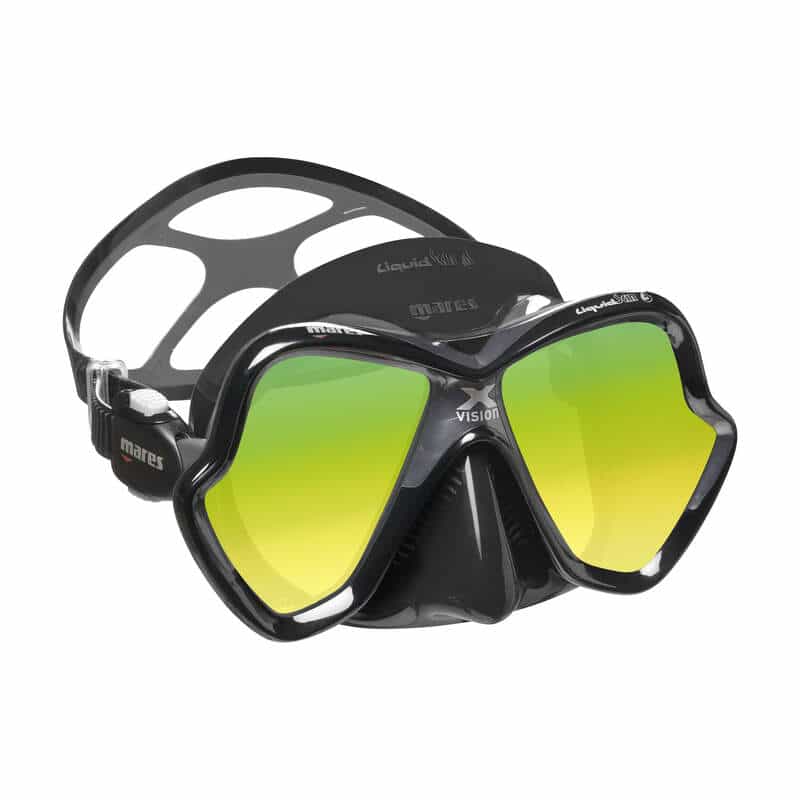
Lenses close to the eyes tend to improve the field of vision. Single-lens models offer a continuous frontal area; two-lens models can reduce volume and, in some cases, allow for the installation of specific prescription lenses.
It is also worth checking the downward vision. Being able to quickly see the pressure gauge, instruments, and BCD controls makes use more intuitive. Side lenses increase peripheral perception but add junctions and can create reflections that some people do not appreciate.
4. Transparent or black silicone?
Transparent silicone skirts let in more light and can give a feeling of openness. It is popular among beginners and in bright dives. Black silicone reduces side reflections and helps to concentrate vision, being common in underwater photography and technical diving.
Color does not determine the quality of the seal. Prioritize soft silicone, uniform finish, and a skirt that follows the contour of the face without folding.
5. Strap, buckles, and use with a hood
Buckles should be easy to adjust and robust enough for the intended use. Try the mask with the hood you usually use: the thickness of the neoprene changes the strap position and the feeling of pressure. A neoprene strap can prevent hair entanglement and better distribute force, but it does not replace a good facial fit.
6. Before the first dive
New lenses may retain manufacturing residues that promote fogging. Always follow the manufacturer's instructions for initial preparation; some common treatments are not compatible with plastic lenses or special coatings. Before entering the water, use an appropriate anti-fog product and rinse without repeatedly touching the inside of the lens.
Take the mask for a simple, controlled dive before using it on a trip or a demanding dive. Practice clearing and confirm that you can easily pinch your nose to equalize.
Quick summary
The right mask is one that seals on your face, creates no pressure points, and allows you to comfortably operate your nose, even with your usual equipment. Compare various shapes, perform the seal test without tightening the strap, and choose the volume and lens type according to your diving. The related products below are starting points for comparing different geometries and solutions.