Guia de compra
How to choose a drysuit: comfort, size, and material
After 15 years working as a diving instructor, I've come to a very simple conclusion: underwater, comfort is not a luxury. It's an essential part of safety, concentration, and the enjoyment of diving.
When a diver feels cold, has limited movement, or constantly needs to adjust the air position inside the suit, they stop paying full attention to the dive. Therefore, choosing a drysuit based solely on brand, appearance, or price is rarely a good decision.
The right suit should adapt to the body, the type of diving, and the conditions in which it will be used.
The correct size comes first
A drysuit that is too tight restricts movement in the shoulders, arms, and legs. It also compresses the thermal underwear, reducing its ability to retain warm air.
A suit that is too loose creates the opposite problem: it allows excessive air displacement, makes buoyancy control difficult, and can form uncomfortable folds under the harness or BCD.
The fitting should be done with the thermal underwear that will actually be used. During the fitting, I always recommend checking if it's possible to:
- Squat down and stand up again effortlessly;
- Cross your arms and reach your shoulders;
- Reach the valves and zipper;
- Bend your knees freely;
- Move your feet without the suit becoming too stretched;
- Wear the harness without creating pressure points.
Height, chest, waist, hip, inseam, and foot size should be measured correctly. When no standard size offers a suitable fit, a custom-made suit may be the best investment.
Neoprene or trilaminate?
There is no perfect material for everyone. There are materials that are more suitable for different divers and different types of diving.
Neoprene drysuits
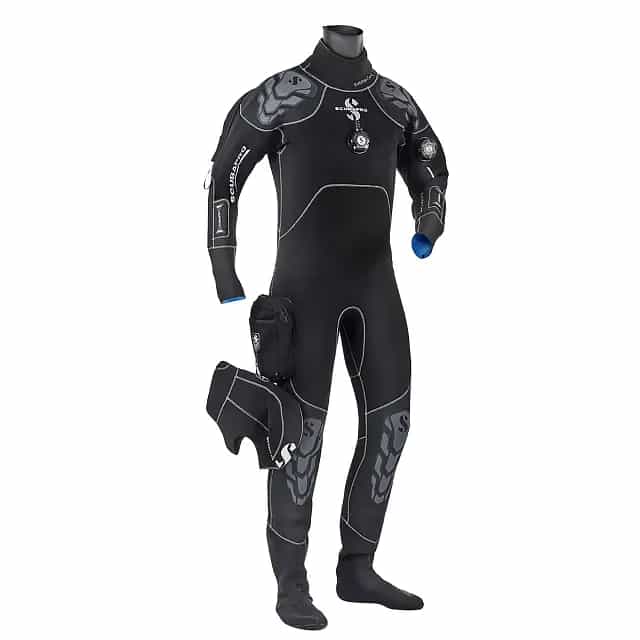
Neoprene provides its own thermal insulation and fits closer to the body. It usually requires less volume of underwear and offers a familiar feel to those accustomed to wetsuits.
It's a very interesting choice for recreational diving in cold waters, especially for those who value simplicity, robustness, and additional insulation.
Among the models available at DiveShop are:
- Scubapro Everdry 4.0 Men's Drysuit
- Scubapro Everdry 4.0 Women's Drysuit
- Scubapro Exodry 4.0 Men's Drysuit
Neoprene is a bit heavier, takes longer to dry, and undergoes some compression with depth. Still, for many recreational divers, it's a comfortable and predictable solution.
Membrane and trilaminate drysuits
A membrane suit offers practically no thermal insulation on its own. Protection against the cold is determined by the chosen underwear.
The great advantage is freedom of movement, quick drying, and the ability to adjust insulation to conditions. In summer, a lighter layer can be used; in winter, warmer thermal underwear.
For technical diving, wrecks, caves, or long dives, I usually prefer this solution for its mobility and ease of configuring the thermal system.
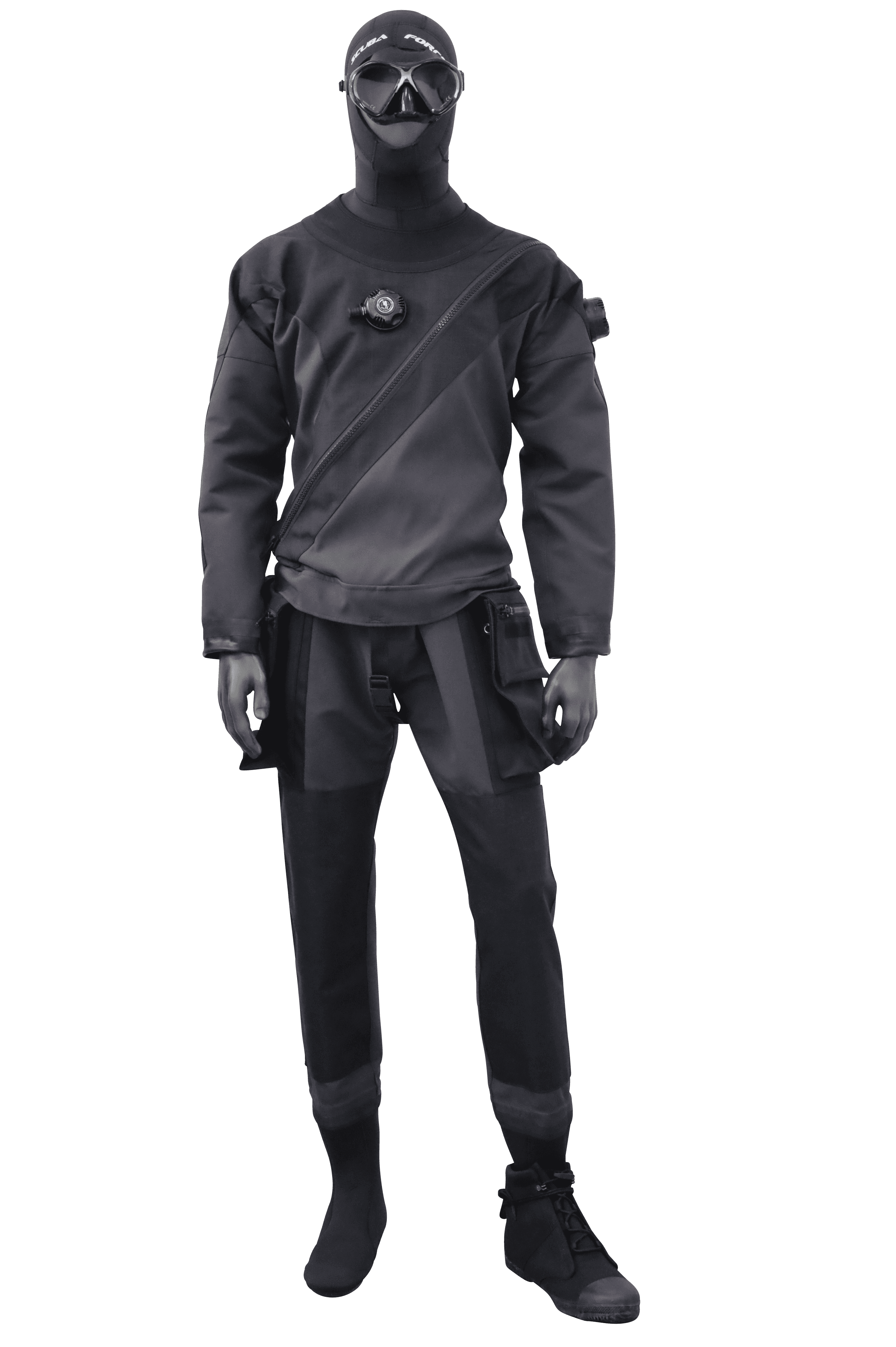
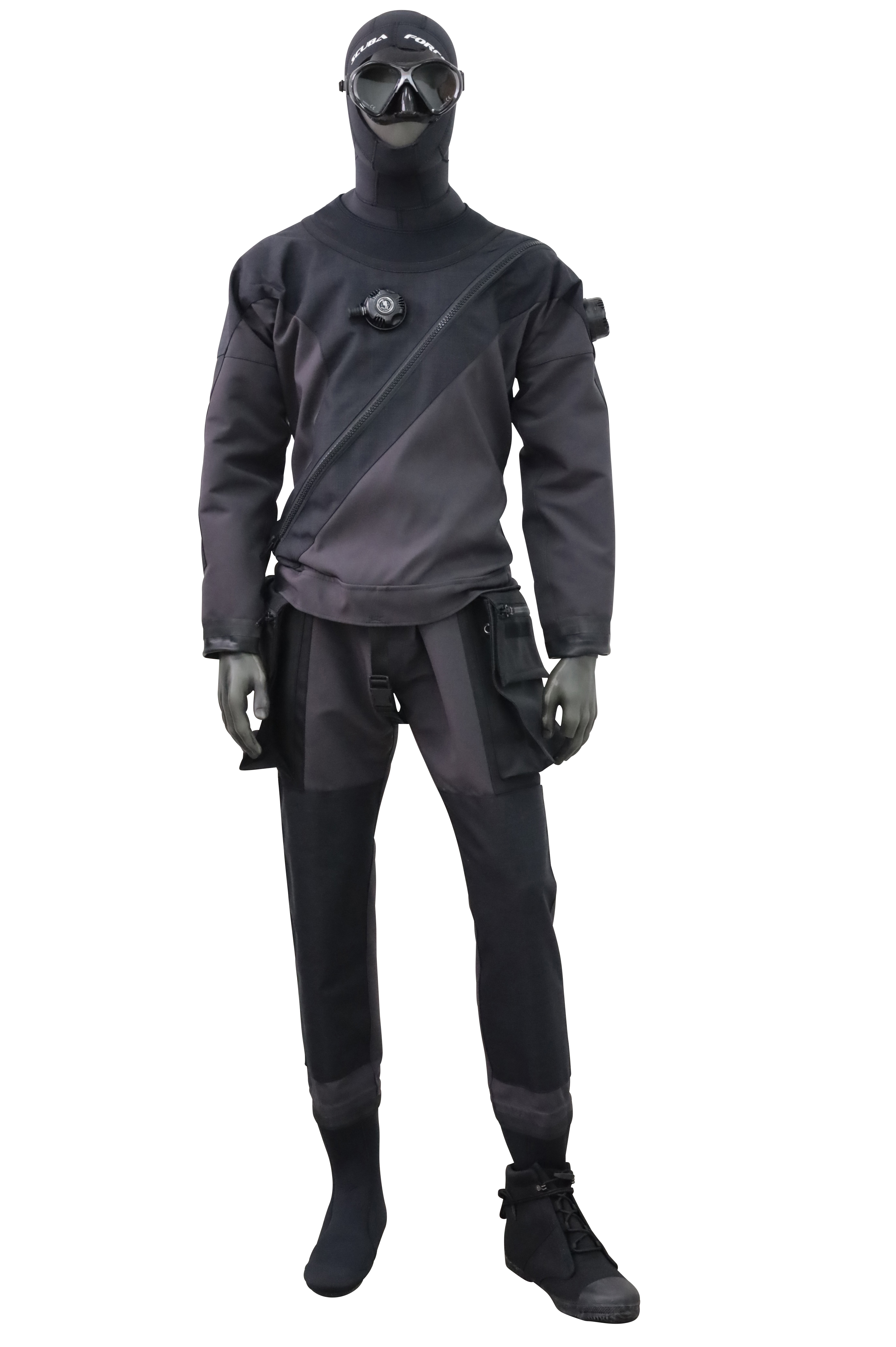
In the Scuba Force range, I would highlight:
- Scuba Force XPEDITION, a versatile technical suit in TYGATEX;
- Scuba Force EXPLORER, a comfortable and breathable option;
- Scuba Force XPEDITION SE, with reinforced Kevlar protection for more demanding environments.
Scubapro also offers membrane solutions, such as the Scubapro Evertech Dry Breathable Women's.
Thermal underwear is part of the system
A trilaminate suit keeps water out, but does not create heat. Comfort depends on the correct combination of the suit and the underwear.
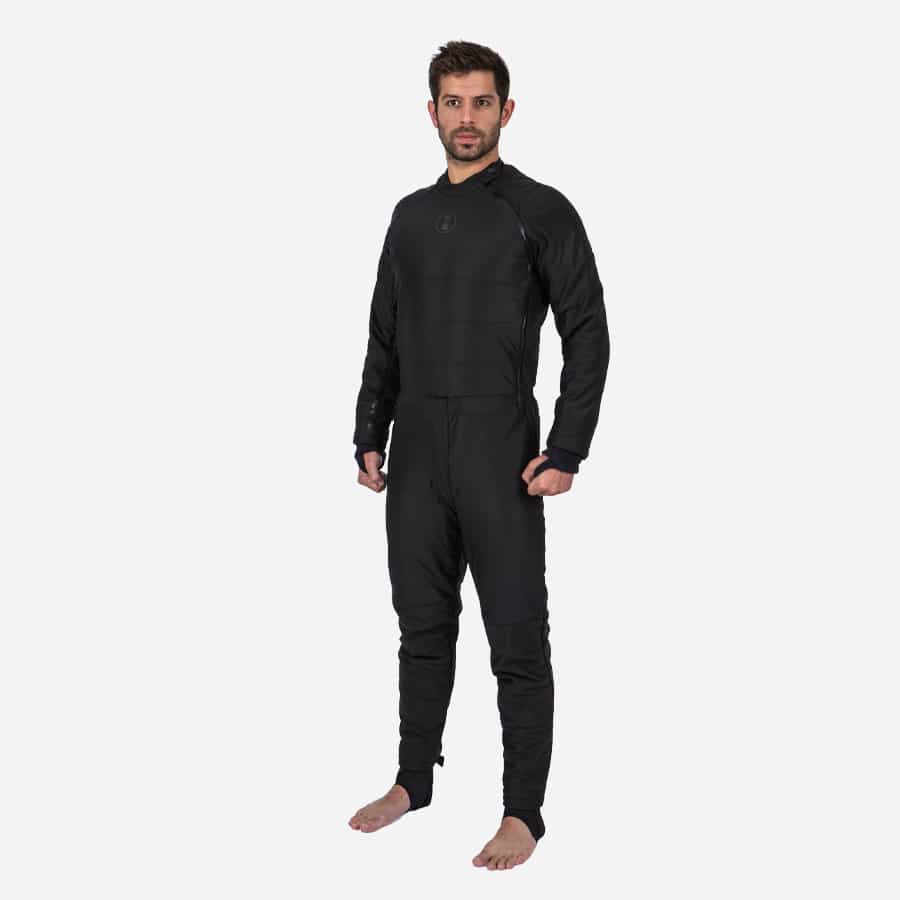
The thermal layer must maintain insulation even under pressure, allow moisture evaporation, and not restrict movement. For cold waters and technical dives, a solution like the Fourth Element Halo A°R offers high insulation with a construction specifically designed for use under drysuits.
It's important to choose thermal underwear before confirming the final suit size. A suit that fits perfectly over a thin layer may become too tight when used with a winter system.
Choose according to the type of diving
For occasional recreational diving, a Scubapro neoprene suit can provide insulation, simplicity, and immediate comfort.
For regular diving in the Atlantic, travel, advanced training, or year-round use, a membrane suit allows you to adapt the underwear to the season.
For technical diving, cave, wreck, or professional use, it's also important to consider:
- Fabric resistance and reinforced areas;
- Type and position of the zipper;
- Technical pockets;
- Boot or sock system;
- Ease of seal replacement;
- Compatibility with dump valve and heating systems;
- Possibility of custom manufacturing.
My recommendation after 15 years
Don't just choose the warmest suit or the model with the most options. Choose the suit in which you can move naturally, control buoyancy, and remain comfortable throughout the dive.
The best drysuit is the one you stop thinking about as soon as you enter the water.
At DiveShop, we work with different models, materials, and configurations — from Scubapro neoprene drysuits to Scuba Force technical membrane solutions, combined with Fourth Element thermal systems.
You can consult all available drysuits. If you have questions about size, material, or thermal underwear, talk to us before ordering. Correct advice before purchase can make a difference for many years of diving.