Guia de compra
How to choose fins for wetsuit and drysuit
Choosing fins seems simple until you switch from a wetsuit to a drysuit. Over 15 years of accompanying divers in training and in real environments, the conclusion is always the same: the best fin is not the stiffest, the heaviest, or the most expensive. It's the one that correctly balances the suit, the boot, leg strength, finning style, and the environment where you'll be diving.
First: the fin is part of a system
The fin should not be chosen in isolation. The volume of the boot, the buoyancy of the suit, body position, and the type of diving completely change the feeling underwater.
With a wetsuit, the setup is usually lighter and more flexible. The neoprene boot has less volume, the ankle moves with greater freedom, and many divers value a progressive blade, capable of generating propulsion without overworking calves and ankles.
With a drysuit, especially with integrated boots or rock boots, the foot takes up more space and there may be more buoyancy in the legs. Here, a robust fin, with good authority and often negative buoyancy, helps control foot position and execute precise movements.
Before buying, always try on the fins with the same boots you use for diving.
Fins for drysuit
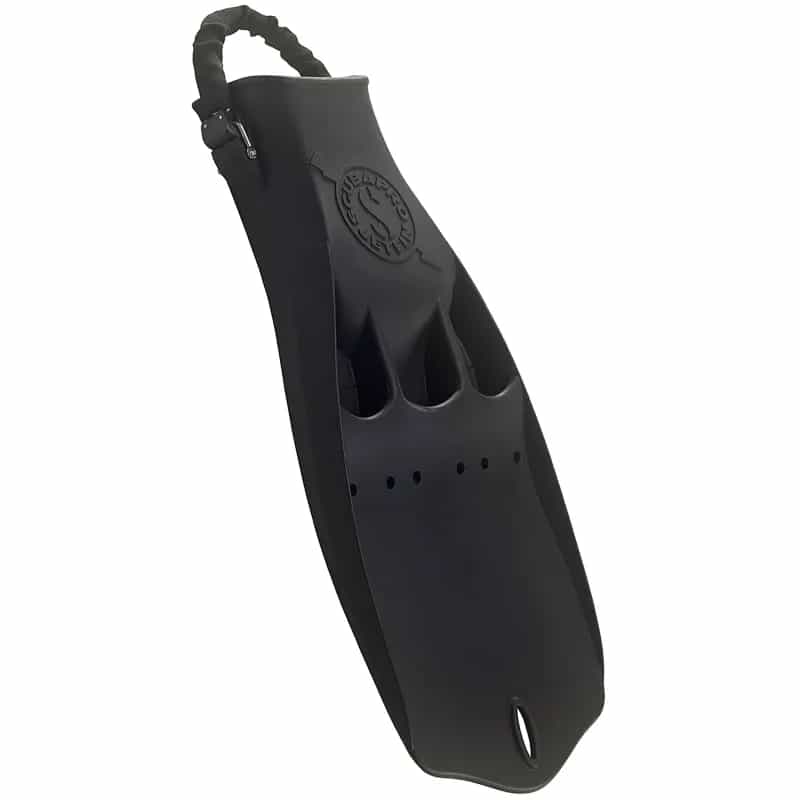
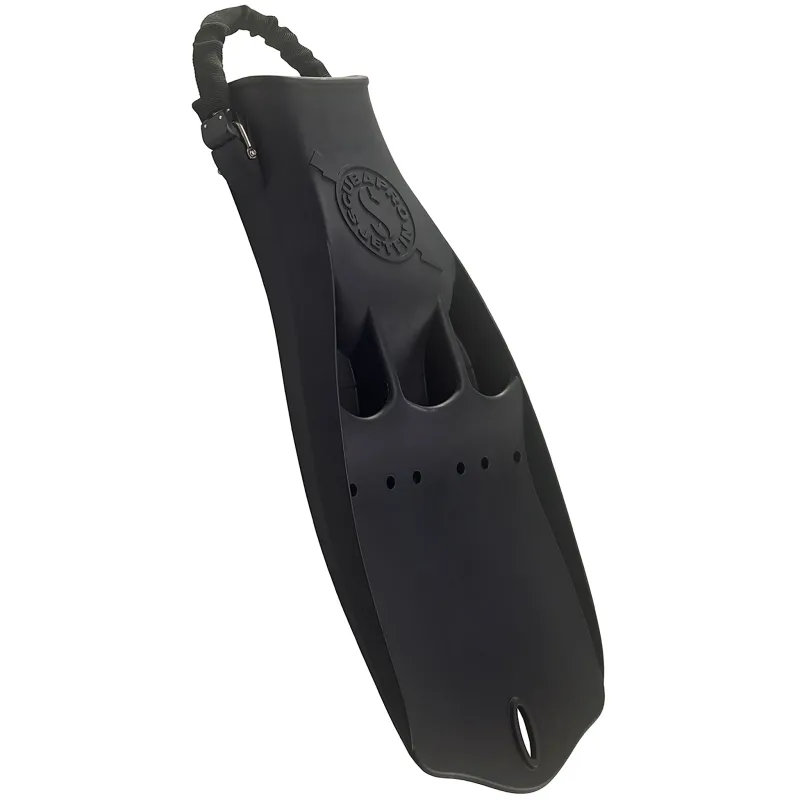
SCUBAPRO Jet Fin
The Jet Fin is a classic reference for technical, professional, and drysuit diving. The integral rubber construction is durable, the wide blade offers a direct response, and the vents reduce drag during the recovery phase, maintaining strong propulsion during the power phase.
The negative buoyancy is especially useful for compensating for bulky boots and legs that tend to rise. It also works very well with frog kick, helicopter turn, and back kick when the technique is consolidated.
It is a suitable choice for those looking for:
- stability and control with a drysuit;
- a robust fin for intensive use;
- good response in current;
- precision in technical diving, wrecks, or confined environments.
The less favorable aspect is the weight. For air travel or for a diver with little leg strength, it can be excessive. A powerful blade does not replace technique and can increase fatigue if the size or stiffness are not appropriate.
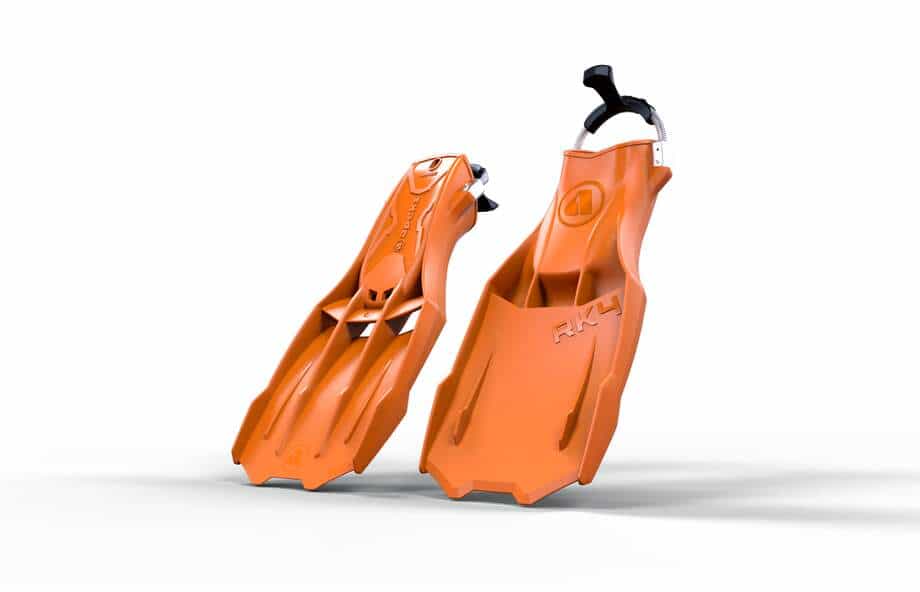
Apeks RK4
The RK4 follows a modern technical approach: compact and wide blade, one-piece rubber construction, and high maneuverability. It was designed to produce propulsion in both the downward and upward movements and excels in frog kick and back kick.
A particularly useful point is the stainless steel spring system with two adjustment points, designed to switch between wetsuit and drysuit configurations. This allows the same pair to be adapted to boots with different volumes.
It is a good option for:
- those who regularly switch between wetsuit and drysuit;
- diving in caves, wrecks, or places where small movements matter;
- divers who prefer a more compact technical blade;
- fine control near the bottom, with less disturbance of sand or sediment.
Even though it is compatible with both types of suits, the fit should be confirmed with each boot. A foot pocket that is too wide reduces energy transfer; too tight causes pressure points and can limit circulation.
Fins for wetsuit
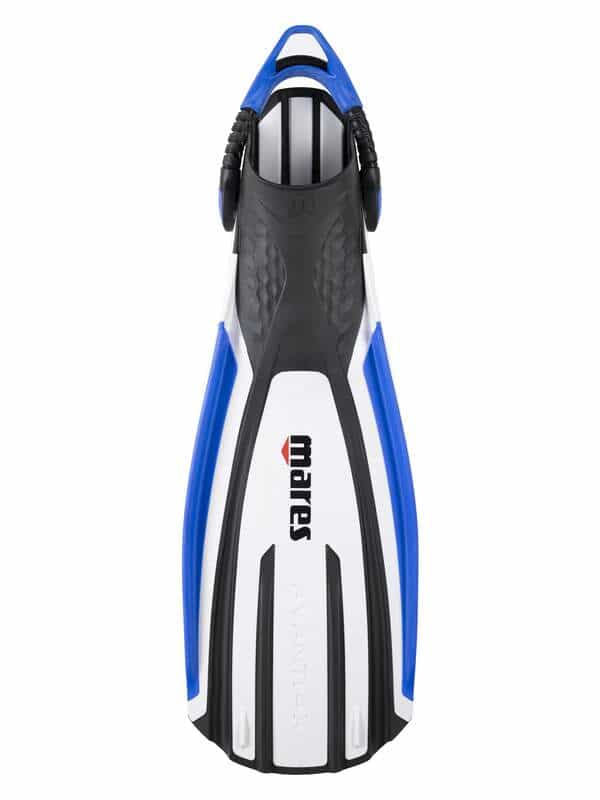
Mares Avanti Quattro 4X
The Avanti Quattro 4X combines a three-material blade with four propulsion channels. The goal is to guide the water, produce efficient thrust, and reduce fatigue during long dives. The foot pocket has a softer upper zone for comfort and a reinforced base to transfer energy to the blade.
The Bungee strap and the anatomical heel area make it easy to put on, even with gloves. It is a versatile fin for recreational diving, suitable for different finning styles and particularly interesting for those who want power without the feel of an integral rubber fin.
I recommend it to divers looking for:
- a progressive and comfortable response;
- good efficiency on long journeys;
- versatility between flutter kick and frog kick;
- an open-heel fin for neoprene boots.
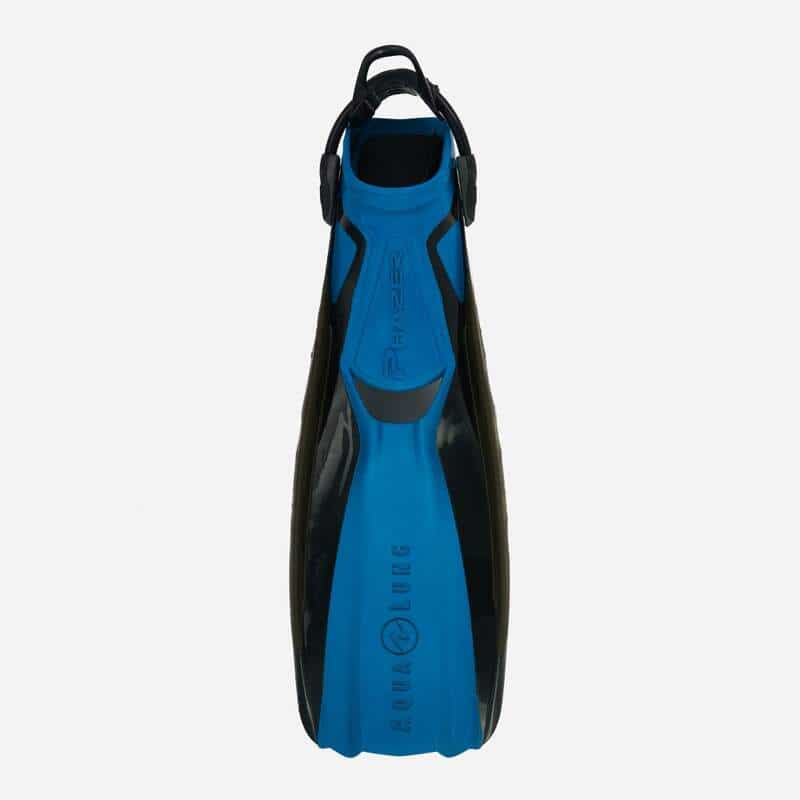
Aqualung PHAZER
The PHAZER uses three-material construction, wavy side ribs, and a water channel in front of the foot pocket. The ribs accumulate and release energy during the fin stroke, while the central membrane helps channel the water.
In practice, it is a comfortable option for those still perfecting their technique, but offers enough power for experienced divers. The Bungee strap simplifies donning and the heel protection improves comfort on deck and during the dive.
It is especially suitable for:
- courses and regular recreational diving;
- those who prefer a responsive, but not excessively stiff blade;
- travel and wetsuit diving;
- divers who value comfort and ease of use.
Also consult the Aqualung collection to compare other equipment from the brand.
The correct size is decisive
Don't choose based solely on shoe size. Put on the boot, insert your foot all the way to the bottom, and confirm three points:
1. The foot pocket holds the boot without compressing your toes.
2. The strap is centered on the heel and maintains sufficient tension.
3. The foot does not move sideways when simulating a fin stroke.
With drysuit boots, also try squatting and moving your ankle. The fin should feel secure without pressing on the top of your foot.
Stiffness, technique, and physical condition
A stiff fin can convert more force into propulsion, but requires prepared legs and ankles. A more flexible blade tends to be comfortable on long journeys, but may require a higher cadence in current.
If you often get cramps, don't automatically choose the softest fin. Check hydration, size, strap position, and technique. Many cramps appear because the diver points their foot too much or only uses their ankle instead of involving the entire leg.
Test before deciding
Whenever possible, do a simple dive with the chosen model. Test:
- slow and strong flutter kick;
- frog kick;
- stop and start;
- helicopter turn;
- back kick, if you already master the technique;
- ascent and descent maintaining a horizontal position.
The best fin is the one that allows you to control your body without constantly thinking about your feet.
Instructor's summary
For drysuits, the SCUBAPRO Jet Fin offers weight, robustness, and a classic response; the Apeks RK4 prioritizes maneuverability and adjustment between different configurations.
For wetsuits, the Mares Avanti Quattro 4X combines power and versatility, while the Aqualung PHAZER offers a progressive, comfortable, and accessible fin stroke.
The final decision should consider the actual boot, technique, physical condition, and dive site. If you have doubts, bring your boots to the store: a few minutes of proper fitting can prevent many hours of discomfort underwater.